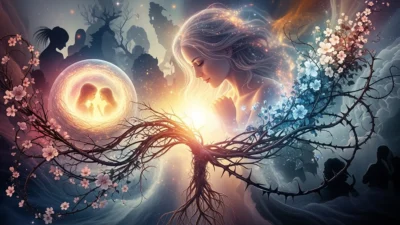
Dreams have fascinated humanity for thousands of years. Long before modern psychology, people believed dreams were messages from the divine, glimpses of the future, or reflections of the soul. Across different eras and cultures, dream interpretation has evolved—from mystical and spiritual explanations to scientific and psychological theories.
Understanding these historical perspectives helps you see that dreams are not just random images. They are deeply connected to human belief systems, emotions, and the search for meaning.
Ancient Civilizations: Dreams as Divine Messages
Mesopotamia and Egypt
In ancient civilizations like Mesopotamia and Egypt, dreams were seen as sacred communications from gods.
- Priests acted as dream interpreters
- Dreams were recorded on tablets and papyrus
- People sought guidance through rituals and “dream incubation” (sleeping in temples)
Dreams were believed to predict:
- Future events
- Health outcomes
- Divine approval or warning
Ancient Greece and Rome
In Greece and Rome, dreams were also tied to the divine, but with more structured interpretation.
- Temples of healing used dreams for medical diagnosis
- Philosophers began questioning whether dreams came from gods or the mind
Thinkers like Aristotle proposed that dreams were linked to sensory experiences and internal processes, not just divine forces—an early shift toward scientific thinking.
Religious Perspectives: Spiritual and Moral Messages
Biblical and Islamic Views
In many religious traditions, dreams are seen as spiritual messages or guidance.
- In the Bible, figures like Joseph interpreted dreams as prophetic visions
- In Islamic tradition, dreams are categorized into:
- True dreams (from God)
- Disturbing dreams (from negative influences)
- Everyday dreams (from the mind)
Dreams were often taken seriously as tools for moral guidance and future insight.
Medieval Period: Dreams as Supernatural or Moral Signs
During the Middle Ages, dreams were often viewed through a religious and moral lens:
- Good dreams were believed to come from divine sources
- Bad dreams were sometimes seen as temptations or warnings
- Interpretation focused on spiritual purity and sin
Dreams were less about personal psychology and more about external spiritual forces.
Renaissance and Enlightenment: Shift Toward Reason
As scientific thinking grew, attitudes toward dreams began to change:
- Dreams were increasingly seen as natural phenomena
- Scholars explored links between dreams and physical health or daily life
- Supernatural explanations started to decline
This period marked the beginning of understanding dreams as part of human biology and cognition.
Modern Psychology: The Inner Mind Revealed
Freudian Theory
Sigmund Freud revolutionized dream interpretation by suggesting:
- Dreams reveal unconscious desires
- Symbols represent hidden wishes and conflicts
- Dreams are a form of wish fulfillment
Jungian Perspective
Carl Jung expanded this idea:
- Dreams express the collective unconscious
- Symbols (archetypes) have universal meanings
- The “shadow” represents hidden aspects of the self
Jung believed dreams guide us toward self-discovery and balance.
Contemporary Scientific Views
Today, neuroscience explains dreams in terms of brain activity:
- Dreams occur during REM sleep
- The brain processes memories, emotions, and experiences
- The “threat simulation theory” suggests dreams help us rehearse dangers
Modern science views dreams as a mix of:
- Emotional processing
- Memory consolidation
- Problem-solving
Cultural Differences in Dream Interpretation
Even today, dream meanings vary across cultures:
- Some cultures still view dreams as spiritual messages
- Others see them as psychological reflections
- In many societies, dreams are used for guidance, healing, and storytelling
This diversity shows that dream interpretation is shaped by beliefs, traditions, and personal experiences.
Personal Growth Lessons from History
Looking at history, one thing is clear: dreams have always been meaningful.
They can help you:
- Reflect on your emotions and inner world
- Understand your beliefs and values
- Explore both spiritual and psychological dimensions
Instead of choosing one perspective, you can use a balanced approach—combining intuition, reflection, and logic.
FAQ
1. How were dreams interpreted in ancient times?
They were often seen as messages from gods or divine forces.
2. Who first studied dreams scientifically?
Philosophers like Aristotle began exploring natural explanations, later expanded by psychologists.
3. What did Freud believe about dreams?
He believed dreams reveal unconscious desires and hidden wishes.
4. How is Jung’s view different?
Jung focused on archetypes and the collective unconscious, not just personal desires.
5. Do modern scientists believe dreams have meaning?
Yes, but they explain them through brain activity and emotional processing.
6. Are dreams spiritual or psychological?
They can be both, depending on your perspective and beliefs.
7. Why do different cultures interpret dreams differently?
Because interpretations are shaped by traditions, religion, and worldview.
Mindful Conclusion
From ancient temples to modern neuroscience, dreams have always been a bridge between the seen and unseen, the conscious and unconscious. While interpretations have evolved, the core idea remains the same: dreams reflect something meaningful within us.
Whether you see them as spiritual messages or psychological processes, dreams offer a unique window into your mind, emotions, and deeper self.