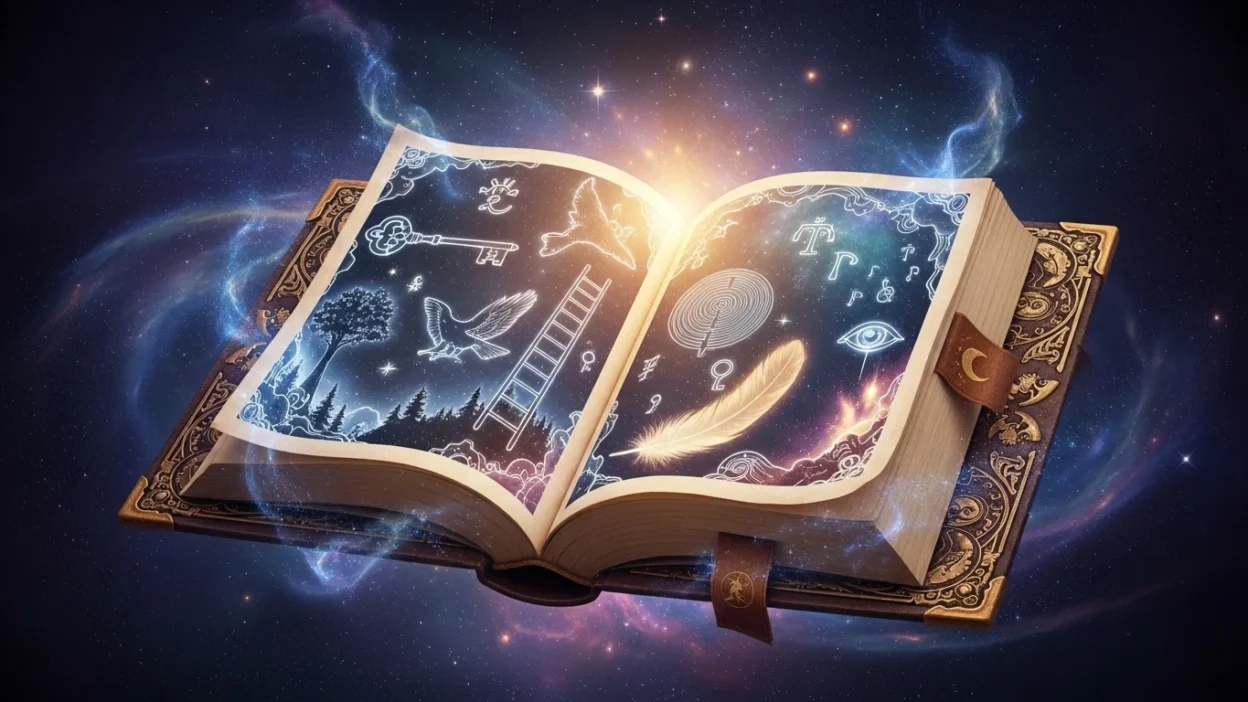
Have you ever searched for a “dream meaning book” hoping to decode a strange or emotional dream? You’re not alone. For centuries, people have turned to books as guides to understand the mysterious language of dreams.
A dream book—often called a dream dictionary or interpretation guide—is designed to help you translate symbols, emotions, and scenarios into meaningful insights about your inner world. But here’s the truth: these books don’t give fixed answers—they offer guidance, patterns, and possibilities.
What Is a Dream Meaning Book?
A dream meaning book is a collection of symbols and interpretations that explain what different dream elements might represent.
What You’ll Typically Find
- Alphabetical listings of dream symbols (e.g., water, snakes, flying)
- Psychological and spiritual meanings
- Cultural or religious interpretations
- Guidance on analyzing your own dreams
These books act like a map of the subconscious, helping you explore hidden thoughts and emotions.
Famous Dream Interpretation Books
1. The Interpretation of Dreams
Written by Sigmund Freud, this classic (published in 1899) introduced the idea that dreams reveal unconscious desires and hidden wishes.
- Focus: Psychology and the unconscious mind
- Key idea: Dreams have hidden (latent) meanings behind their surface story
2. Great Book of Interpretation of Dreams
Attributed to Ibn Sirin, this traditional text connects dreams with spiritual and religious meaning.
- Focus: Islamic and spiritual interpretation
- Key idea: Dreams can be messages, warnings, or reflections of faith
3. The Dream: Introduction into the Psychology of Dreams
A simpler guide that explains how dreams work psychologically and helps readers understand deeper theories.
How Dream Books Actually Work
Dream books are not “one-size-fits-all.” Instead, they rely on patterns.
Modern research shows that dreams often reflect recent thoughts, emotions, and daily experiences.
Example
- Dreaming of falling → may relate to feeling out of control
- Dreaming of being chased → may reflect avoidance or stress
But your personal context always matters more than the general meaning.
Spiritual vs Psychological Dream Books
Spiritual Dream Books
- Focus on symbols, signs, and intuition
- Often linked to religion or energy (chakras, soul growth)
- Example: Ibn Sirin’s interpretations
Psychological Dream Books
- Focus on mind, memory, and emotions
- Based on theories like Freud or Jung
- View dreams as mental processing tools
Both approaches can be useful—you don’t have to choose just one.
Are Dream Meaning Books Accurate?
Here’s the honest answer: partially—but not completely.
Dream books:
✔ Help you recognize patterns
✔ Offer starting points for reflection
✔ Expand your understanding
But they cannot fully interpret your dream for you because:
- Dreams are deeply personal
- Symbols change based on your experiences
- Emotions matter more than symbols alone
How to Use a Dream Book Effectively
To get real value, don’t just look up symbols—engage with your dream.
Simple Method
- Write your dream down immediately
- Identify key symbols (people, objects, actions)
- Look them up in a dream book
- Ask yourself: Does this meaning fit my life right now?
The goal is not memorization—it’s self-understanding.
Modern Alternatives to Dream Books
Today, people also use:
- Dream interpretation apps
- Online guides and articles
- Personal journaling
These tools aim to help you explore your subconscious patterns and emotional state more interactively.
FAQ
1. What is the best dream meaning book?
It depends on your interest:
- Psychology → Freud
- Spiritual → Ibn Sirin
- Beginner-friendly → modern guides
2. Can a dream book predict the future?
No. Most dreams reflect your thoughts and emotions, not literal future events.
3. Why do different books give different meanings?
Because dream interpretation varies by culture, psychology, and belief systems.
4. Are dream dictionaries reliable?
They are helpful for guidance, but not absolute truth.
5. Should I trust my dream book or my feelings?
Your feelings and intuition are more important.
6. Can I interpret dreams without a book?
Yes. Many experts believe dreams are best understood through personal reflection.
7. Why do I keep dreaming the same thing?
Recurring dreams usually signal an unresolved issue or emotion.
Conclusion
A dream meaning book is not a magic decoder—it’s a tool for self-discovery.
Whether you explore classic works like Freud’s psychological theories or spiritual interpretations rooted in tradition, the real meaning of your dreams lies within your own emotions, experiences, and awareness.
Think of dream books as a guide—but you are the interpreter.