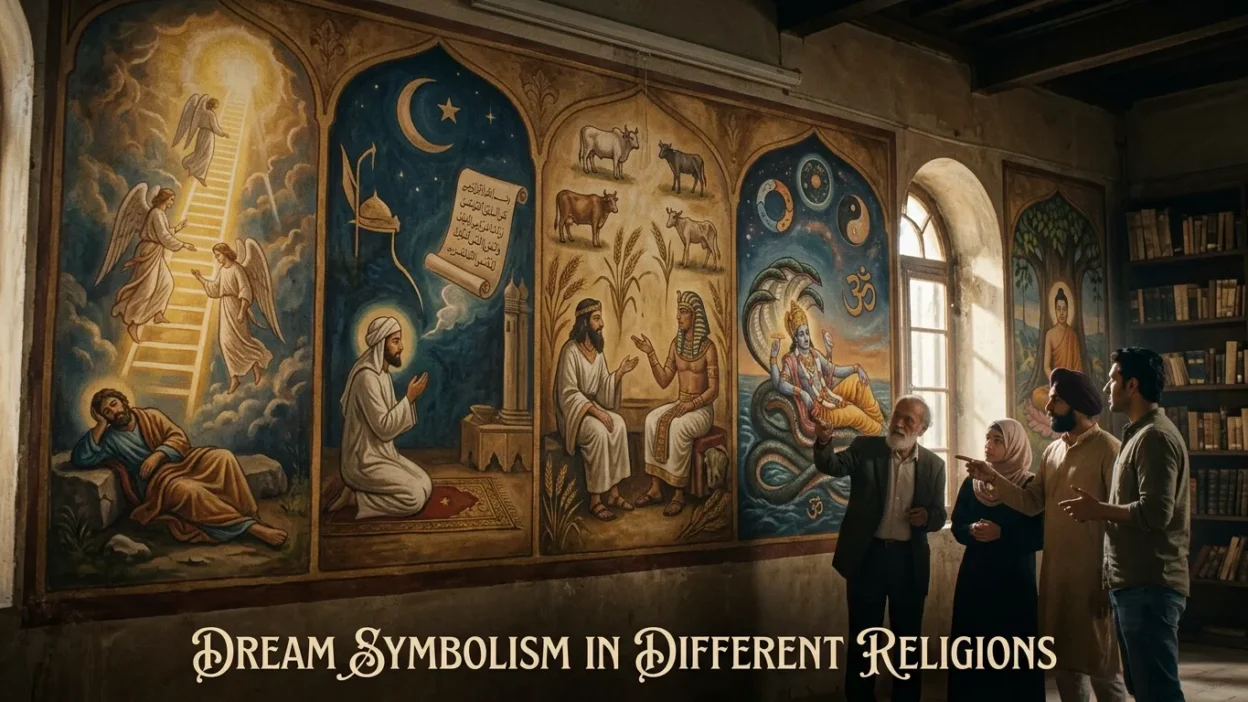
Dreams have fascinated humanity for thousands of years, and nearly every major religion has developed its own understanding of their meaning. Some traditions view dreams as messages from God, while others see them as reflections of the subconscious mind, spiritual guidance, or symbolic experiences rather than literal predictions. Across cultures and faiths, dreams have inspired sacred texts, influenced important decisions, and encouraged personal reflection and spiritual growth.
The symbolism of dreams in different religions varies widely, but many traditions share common themes such as divine guidance, moral reflection, spiritual awakening, personal transformation, wisdom, hope, and self-discovery. While interpretations differ, most religions encourage believers to approach dreams with humility, discernment, and an understanding that not every dream carries a supernatural message.
In this comprehensive guide, we will explore dream symbolism in different religions, including Christianity, Islam, Judaism, Hinduism, Buddhism, Sikhism, Indigenous traditions, ancient beliefs, and modern spiritual perspectives. We will also examine common dream symbols that appear across multiple faiths and what they may represent.
Why Dreams Are Important in Many Religions
Throughout history, dreams have often been viewed as opportunities for spiritual reflection rather than simple nighttime experiences.
Many religions believe dreams can encourage:
- Personal growth
- Spiritual awareness
- Moral reflection
- Emotional healing
- Wisdom
- Hope
- Faith
- Self-examination
At the same time, most traditions caution against assuming that every dream is a direct message from the divine.
Dream Symbolism in Christianity
In Christianity, dreams appear throughout the Bible and are sometimes used as a means of communication, guidance, or warning. However, Christian teaching also emphasizes discernment, prayer, and testing any perceived spiritual message against Scripture rather than relying on dreams alone.
Common Christian Dream Symbols
- Light – God’s presence, truth, hope, and guidance.
- Water – Spiritual cleansing, renewal, and new life.
- Mountains – Faith, perseverance, and drawing closer to God.
- Shepherd – Guidance, care, and protection.
- Bread – Spiritual nourishment and God’s provision.
- Open doors – New opportunities or answered prayer.
- Storms – Trials that strengthen faith.
- White clothing – Purity, forgiveness, and spiritual renewal.
Christianity generally encourages believers to respond to dreams with prayer, wisdom, and humility.
Dream Symbolism in Islam
In Islam, dreams have long been recognized as meaningful, but scholars distinguish between different kinds of dreams. Classical Islamic teachings describe three broad categories:
- Good dreams that may bring comfort or encouragement.
- Dreams influenced by personal thoughts and daily experiences.
- Disturbing dreams that should not be treated as guidance.
Common Islamic Dream Symbols
- Water – Mercy, knowledge, or purification.
- Light – Guidance, faith, and righteousness.
- Gardens – Peace, blessings, and spiritual reward.
- Rain – Mercy, growth, and provision.
- Trees – Faith, family, and stability.
- Birds – Freedom, hope, or spiritual elevation.
Islam encourages gratitude for beneficial dreams while avoiding superstition or fear regarding disturbing dreams.
Dream Symbolism in Judaism
Judaism acknowledges dreams throughout the Hebrew Scriptures, where they sometimes serve as symbolic experiences that require wisdom and discernment.
Common Jewish Dream Symbols
- Ladders – Spiritual connection and personal growth.
- Stars – Divine purpose and hope.
- Olive branches – Peace and blessing.
- Light – Wisdom and God’s presence.
- Wells – Knowledge, life, and spiritual refreshment.
- Wine – Joy, celebration, and covenant.
Jewish tradition generally emphasizes careful interpretation and recognizes that not every dream carries prophetic significance.
Dream Symbolism in Hinduism
Hindu philosophy often views dreams as part of the mind’s experience and, in some traditions, as reflections of karma, spiritual growth, and the soul’s journey.
Common Hindu Dream Symbols
- Lotus flowers – Purity, enlightenment, and spiritual awakening.
- Rivers – Cleansing and life’s flow.
- Temples – Divine connection and inner peace.
- Elephants – Wisdom, strength, and prosperity.
- Mountains – Spiritual discipline and higher understanding.
- Fire – Transformation and purification.
Dreams may encourage self-reflection, devotion, and spiritual development.
Dream Symbolism in Buddhism
Buddhism generally views dreams as expressions of the mind rather than fixed predictions of the future.
Dreams may reveal:
- Attachments
- Desires
- Fears
- Compassion
- Personal awareness
- Mental habits
Common Buddhist Dream Symbols
- Lotus flowers – Enlightenment and purity.
- Clear water – Mental clarity.
- Mountains – Inner stability.
- The moon – Wisdom and peaceful awareness.
- Open sky – Freedom from attachment.
The emphasis is often on observing dreams without becoming attached to them.
Dream Symbolism in Sikhism
Sikh teachings emphasize remembering God, living honestly, and avoiding superstition.
Dreams are generally viewed as less important than:
- Faithful living
- Prayer
- Humility
- Service
- Moral character
While dreams may inspire reflection, they are not typically considered a primary source of spiritual guidance.
Indigenous and Native Spiritual Traditions
Many Indigenous cultures around the world have traditionally viewed dreams as meaningful experiences connected to nature, ancestors, community, and personal growth.
Common themes include:
- Guidance
- Healing
- Wisdom
- Balance
- Respect for nature
- Community responsibility
Interpretations vary greatly among different Indigenous peoples and should not be generalized into a single belief system.
Ancient Egyptian Beliefs About Dreams
Ancient Egyptians often viewed dreams as significant spiritual experiences.
Dreams could symbolize:
- Guidance
- Warnings
- Protection
- Healing
- Messages from the divine
Temples were sometimes associated with dream practices and spiritual reflection.
Ancient Greek Perspectives
Ancient Greeks held a variety of beliefs about dreams.
Some viewed dreams as:
- Messages from the gods.
- Reflections of health.
- Sources of wisdom.
- Opportunities for healing.
Dream interpretation played an important role in several philosophical and religious traditions.
Common Dream Symbols Across Multiple Religions
Although interpretations differ, several symbols appear repeatedly across many faiths.
Water
Often symbolizes:
- Purification
- Renewal
- Healing
- Spiritual life
Light
Commonly represents:
- Truth
- Wisdom
- Hope
- Divine presence
Mountains
Frequently symbolize:
- Faith
- Perseverance
- Spiritual growth
- Higher understanding
Trees
Often represent:
- Life
- Stability
- Wisdom
- Growth
Birds
Commonly symbolize:
- Freedom
- Hope
- Spiritual elevation
- New beginnings
Fire
Often represents:
- Transformation
- Purification
- Passion
- Spiritual renewal
Journeys
Travel in dreams frequently symbolizes:
- Personal growth
- Life’s path
- Spiritual progress
- Self-discovery
Similarities Between Religious Dream Interpretations
Many religions share important themes.
Dreams often encourage:
- Compassion
- Wisdom
- Faith
- Self-reflection
- Personal growth
- Humility
- Hope
- Moral responsibility
These shared values demonstrate that dreams often point people toward becoming wiser and more compassionate rather than predicting specific future events.
Key Differences Between Religious Views
Religions differ in several ways:
- Whether dreams are viewed as divine communication.
- How dreams should be interpreted.
- The importance given to dreams.
- Whether symbolic or literal meanings are emphasized.
- The role of prayer, meditation, or discernment in understanding dreams.
Understanding these differences helps prevent oversimplifying diverse religious traditions.
Psychological Perspective
Modern psychology views dreams primarily as reflections of the mind.
Dreams may process:
- Emotions
- Memories
- Stress
- Learning
- Relationships
- Personal identity
Rather than contradicting religious beliefs, many people see psychological and spiritual perspectives as complementary ways of understanding dreams.
Scientific Perspective
Neuroscience suggests dreams are connected to:
- REM sleep
- Memory consolidation
- Emotional regulation
- Creativity
- Problem-solving
- Learning
Current scientific evidence does not confirm that dreams universally predict future events, but research supports their role in emotional and cognitive processing.
How to Approach Religious Dream Symbolism Wisely
When reflecting on dreams:
- Avoid assuming every dream is supernatural.
- Consider your current life circumstances.
- Reflect on your emotions.
- Seek wisdom through prayer or meditation if it aligns with your faith.
- Compare interpretations with the teachings of your religious tradition.
- Focus on personal growth rather than fear.
Discernment is valued across many religious traditions.
Frequently Asked Questions
Do all religions believe dreams are messages from God?
No. Some religions recognize that certain dreams may carry spiritual significance, while others primarily view dreams as reflections of the mind or symbolic experiences.
Are dream symbols the same in every religion?
No. Although many symbols overlap, their meanings often differ depending on each religion’s beliefs, sacred texts, and traditions.
Why do water and light appear in many religions?
Water and light are universal symbols associated with life, purity, wisdom, hope, and spiritual renewal, which explains why they appear in many religious traditions.
Does science support religious dream interpretations?
Science studies how dreams occur and their role in memory, emotions, and brain function. It does not verify specific religious interpretations or supernatural claims.
Can dreams help with spiritual growth?
Many people find that reflecting on dreams encourages greater self-awareness, emotional healing, and spiritual reflection, regardless of their religious background.
Should every dream be interpreted spiritually?
Not necessarily. Many dreams are influenced by daily experiences, emotions, stress, memories, and normal brain activity during sleep.
Can two people interpret the same dream differently?
Yes. Dream symbolism is often shaped by personal experiences, culture, beliefs, and individual life circumstances.
What is the best way to understand a dream?
Consider your emotions, current life situation, religious beliefs, and the overall message of the dream. Focus on wisdom, personal growth, and discernment rather than searching for fixed or universal meanings.
Conclusion
Dream symbolism has played an important role in religious traditions across the world for thousands of years. While Christianity, Islam, Judaism, Hinduism, Buddhism, Sikhism, Indigenous traditions, and ancient cultures each offer unique perspectives, many share common themes of wisdom, personal transformation, moral reflection, hope, and spiritual growth.
Whether you approach dreams through faith, psychology, or modern neuroscience, they can provide meaningful opportunities for self-reflection and deeper understanding. By combining discernment, humility, and thoughtful reflection, you can appreciate dreams as valuable experiences that encourage growth without assuming every dream carries a literal or supernatural message.