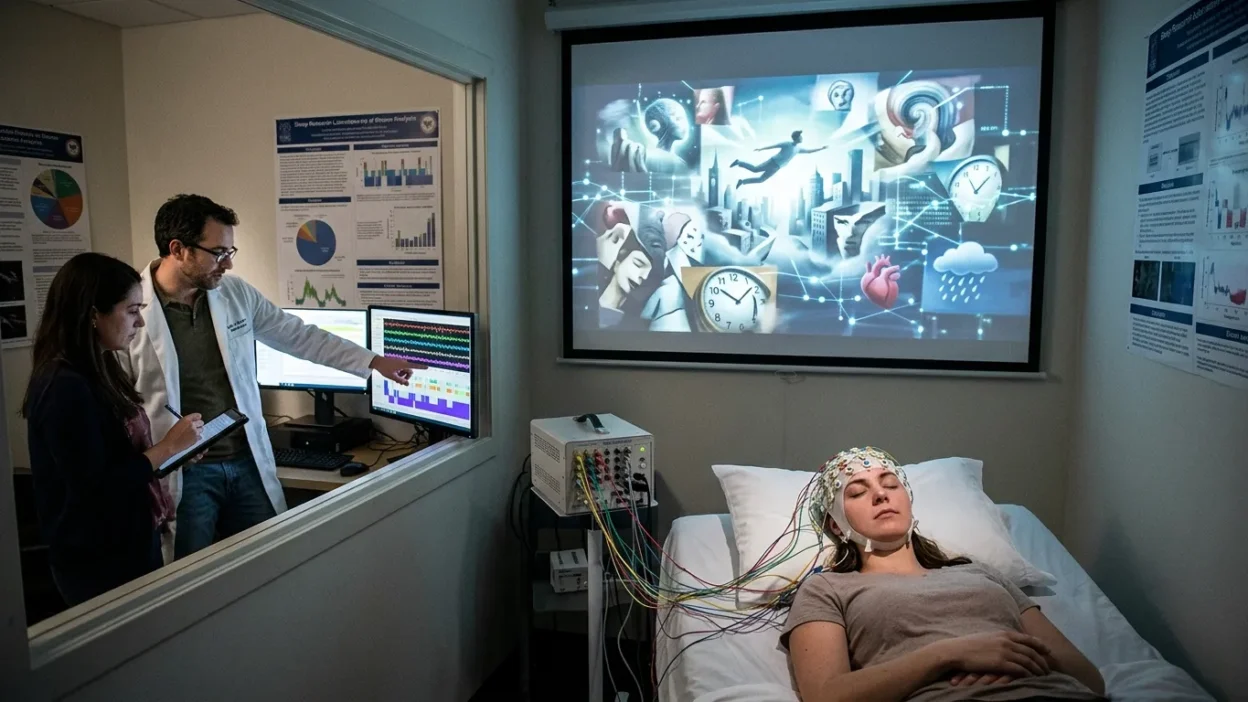
Dreams have fascinated humanity for thousands of years. Ancient civilizations viewed dreams as messages from the divine, while modern psychology explored them as windows into the unconscious mind. Today, neuroscience has transformed our understanding by using brain imaging, sleep laboratories, and cognitive research to investigate what happens when we dream. Although scientists still debate the exact purpose of dreaming, decades of research have revealed that dreams play an important role in emotional processing, memory, creativity, and overall brain health.
Scientific studies show that dreams are not simply random mental events. Instead, they are closely connected to the brain’s activity during sleep, particularly during Rapid Eye Movement (REM) sleep, when brain activity becomes highly similar to wakefulness. Dreams can reflect recent experiences, long-term memories, emotions, fears, hopes, and even the brain’s attempts to solve problems or prepare for future challenges.
In this comprehensive guide, we will explore the scientific studies on dreams, examining how dreams occur, why scientists believe we dream, major psychological theories, brain imaging discoveries, sleep stages, memory research, emotional processing, and the latest findings from neuroscience.
What Are Dreams?
Dreams are sequences of thoughts, images, emotions, sounds, and sensations experienced while sleeping.
Dreams may include:
- Familiar people
- Unknown places
- Impossible situations
- Strong emotions
- Memories
- Future concerns
- Creative ideas
Although dreams often feel realistic, they are created entirely by the brain.
How Scientists Study Dreams
Modern dream research combines several scientific methods.
Researchers commonly use:
- Sleep laboratories
- Brain scans (fMRI and PET)
- Electroencephalography (EEG)
- Eye movement recordings
- Sleep diaries
- Dream reports
- Cognitive testing
These tools allow scientists to observe what happens inside the brain before, during, and after dreaming.
Understanding the Stages of Sleep
Sleep occurs in repeating cycles lasting approximately 90–110 minutes.
Each cycle contains different stages.
Stage 1 (N1)
This is light sleep.
Characteristics include:
- Relaxation
- Slowing heartbeat
- Reduced muscle activity
- Brief dream-like images
Stage 2 (N2)
During this stage:
- Body temperature drops.
- Heart rate slows.
- Memory processing begins.
- Brain activity changes.
Most sleep occurs during Stage 2.
Stage 3 (N3)
Known as deep sleep.
This stage is important for:
- Physical recovery
- Immune function
- Growth hormone release
- Tissue repair
Dreams may occur here but are generally less vivid.
REM Sleep
REM stands for Rapid Eye Movement.
This is the stage most closely associated with vivid dreaming.
Characteristics include:
- Rapid eye movements
- Highly active brain
- Temporary muscle paralysis
- Intense emotional processing
- Creative dream experiences
Most memorable dreams occur during REM sleep.
Why Do We Dream?
Scientists have proposed several explanations.
No single theory explains every dream, but many researchers believe dreams serve multiple functions.
The Activation-Synthesis Theory
Developed by researchers J. Allan Hobson and Robert McCarley, this theory suggests that dreams result from random brain activity during REM sleep.
According to this theory:
- The brainstem sends random signals.
- The cerebral cortex attempts to organize those signals.
- Dreams become meaningful stories created by the brain.
Although influential, later research suggests dreams involve more than random activity.
The Threat Simulation Theory
Psychologist Antti Revonsuo proposed that dreams evolved as a survival mechanism.
According to this theory:
Dreams allow people to practice responding to:
- Danger
- Conflict
- Escape
- Social challenges
- Fear
This may explain why chase dreams are so common.
Memory Consolidation Theory
One of today’s strongest scientific explanations suggests dreams help strengthen memories.
During sleep, the brain:
- Organizes information
- Stores important memories
- Removes unnecessary details
- Connects related experiences
Dreaming may help integrate new learning into long-term memory.
Emotional Processing Theory
Many neuroscientists believe dreams help regulate emotions.
Dreams may help process:
- Anxiety
- Sadness
- Joy
- Trauma
- Stress
- Fear
This explains why emotionally significant events often appear in dreams.
Problem-Solving Theory
Some dreams appear to help people solve difficult problems.
Researchers have found that dreams sometimes contribute to:
- Creative thinking
- Scientific discoveries
- Artistic inspiration
- Better decision-making
Several famous inventions and creative works were reportedly inspired by dreams.
Brain Activity During Dreams
Brain scans show fascinating patterns during dreaming.
Increased activity
Scientists observe increased activity in:
- Emotional centers
- Visual processing areas
- Memory regions
Reduced activity
Areas responsible for:
- Logical reasoning
- Self-control
- Critical thinking
become less active.
This helps explain why impossible dream events often seem completely normal while dreaming.
Dreams and Memory
Research shows that dreams frequently combine:
- Childhood memories
- Recent experiences
- Current worries
- Long-term knowledge
Rather than replaying memories exactly, the brain mixes information into new combinations.
Dreams and Mental Health
Dreams are connected to emotional well-being.
Researchers have found relationships between dreaming and:
- Anxiety disorders
- Depression
- PTSD
- Stress
- Emotional resilience
Recurring nightmares may occur more frequently during periods of emotional distress.
Lucid Dreaming Research
A lucid dream occurs when the dreamer realizes they are dreaming.
Scientific studies have shown that during lucid dreams:
- Self-awareness increases.
- Certain brain regions become more active.
- Some people can intentionally influence dream events.
Researchers continue studying lucid dreaming for possible therapeutic applications.
Dreams and Creativity
Many creative individuals have credited dreams with inspiring their work.
Dreaming encourages:
- Novel connections
- Flexible thinking
- Imagination
- Innovation
The sleeping brain often combines ideas in ways the waking mind does not.
Can Dreams Predict the Future?
Scientific evidence does not support the claim that dreams reliably predict future events.
However, dreams may sometimes seem predictive because they:
- Reflect unconscious observations.
- Process subtle information.
- Highlight personal concerns.
- Simulate possible future situations.
Coincidences and selective memory can also contribute to the impression of prophetic dreams.
Why Are Some Dreams Forgotten?
Most dreams disappear quickly after waking.
Scientists believe this happens because:
- Brain chemistry changes upon waking.
- Attention shifts to daily activities.
- Dream memories are fragile.
- The brain prioritizes waking information.
Keeping a dream journal can improve dream recall.
Common Types of Dreams Studied by Researchers
Researchers frequently investigate:
- Falling dreams
- Flying dreams
- Being chased
- Losing teeth
- Missing exams
- Arriving late
- Naked in public
- Lucid dreams
- Nightmares
- False awakenings
These themes appear across many cultures.
Scientific Studies on Nightmares
Nightmares are vivid dreams involving intense fear or distress.
Research suggests nightmares may be influenced by:
- Trauma
- Stress
- Anxiety
- Certain medications
- Sleep disorders
Treatments such as Imagery Rehearsal Therapy (IRT) have shown promise in reducing chronic nightmares.
The Role of REM Sleep in Emotional Healing
Many neuroscientists believe REM sleep helps reduce emotional intensity attached to difficult experiences.
During REM sleep, the brain may:
- Reprocess memories
- Reduce emotional distress
- Strengthen learning
- Improve resilience
This may explain why “sleeping on a problem” sometimes helps people feel better.
Recent Discoveries in Dream Neuroscience
Advances in brain imaging continue to improve our understanding of dreams.
Recent research focuses on:
- Neural networks involved in dreaming
- Emotional regulation
- Consciousness
- Lucid dreaming
- Memory consolidation
- Artificial intelligence analysis of brain activity
Although many questions remain, scientists continue uncovering new insights into the sleeping brain.
Practical Benefits of Understanding Dreams
Studying dreams may help you:
- Understand emotions
- Improve self-awareness
- Reduce stress
- Support creativity
- Recognize recurring concerns
- Improve sleep habits
Dream interpretation from a scientific perspective focuses on personal meaning rather than universal symbolism.
Tips for Remembering Dreams
Keep a Dream Journal
Write down dreams immediately after waking.
Get Enough Sleep
Longer sleep increases REM periods and dream recall.
Wake Naturally
Gentle awakenings often improve memory for dreams.
Reflect Without Overanalyzing
Consider how dream themes connect to your daily experiences instead of assuming every dream has a hidden message.
Frequently Asked Questions
Are dreams scientifically important?
Yes. Research suggests dreams are connected to memory, emotional processing, creativity, learning, and mental health.
Why do we dream during REM sleep?
REM sleep features high brain activity, emotional processing, and vivid mental imagery, making it the stage most strongly associated with dreaming.
Can dreams predict the future?
Current scientific evidence does not support dreams as reliable predictors of future events, although they may reflect concerns, expectations, or unconscious observations.
Why do nightmares happen?
Nightmares are commonly associated with stress, trauma, anxiety, sleep disorders, certain medications, or emotionally significant life events.
What is lucid dreaming?
Lucid dreaming occurs when a person becomes aware they are dreaming and may sometimes influence the dream’s events.
Why do we forget dreams?
Dream memories fade quickly because of changes in brain chemistry after waking and the brain’s focus on new information.
Can dreams improve creativity?
Yes. Research suggests dreams can promote creative thinking by combining memories and ideas in unique ways.
Are dreams the same in everyone?
No. While many dream themes are common across cultures, dream content is influenced by personal experiences, emotions, memories, culture, and individual psychology.
Conclusion
Scientific studies on dreams reveal that dreaming is a complex and fascinating function of the human brain. Rather than being meaningless or purely random, dreams appear to contribute to emotional regulation, memory consolidation, creativity, learning, and psychological well-being. Although researchers continue to debate the precise purpose of dreams, decades of neuroscience and sleep research have shown that dreaming plays an important role in how the brain processes experiences and adapts to daily life.
Whether your dreams are vivid adventures, emotional reflections, or imaginative stories, they offer valuable insights into the remarkable workings of the sleeping mind. As scientific discoveries continue to advance, our understanding of dreams will likely become even deeper, helping us appreciate one of the brain’s greatest mysteries.