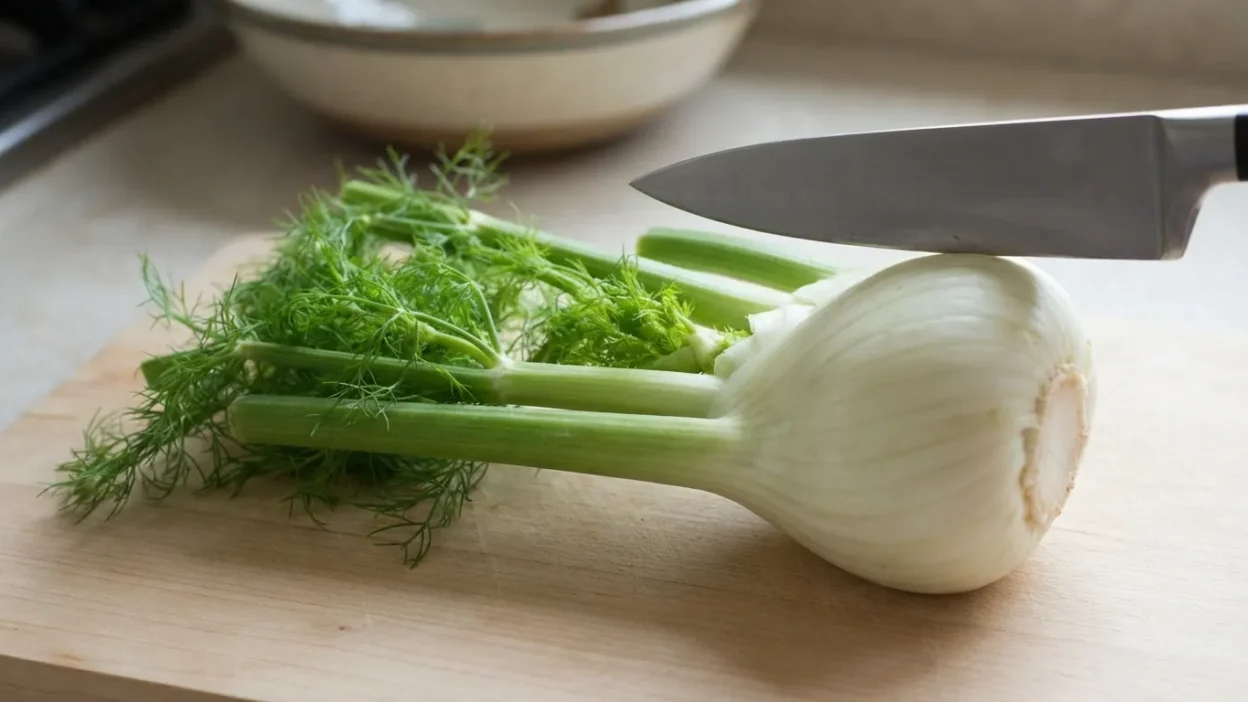
Fennel is one of those vegetables that makes people pause in the produce aisle. With its pale bulb, long green stalks, and feathery fronds, it looks more like a garden plant than something you’d toss into dinner. But once you know how to cut fennel, it becomes one of the easiest and most versatile ingredients in your kitchen.
Raw, it’s crisp, fresh, and lightly sweet with a hint of licorice. Roasted or sautéed, it turns tender and caramelized. All it takes is a sharp knife, a cutting board, and about five minutes.
In this guide, you’ll learn how to choose good fennel, trim and core the bulb, and cut it into slices, wedges, or dice. You’ll also find out how to use the stalks and fronds, and how to store leftovers so nothing goes to waste.
Quick Answer: How to Cut Fennel
To cut fennel, follow these five steps:
- Trim the stalks and fronds about an inch above the bulb, and slice off the browned base.
- Halve the bulb lengthwise, from top to root.
- Core each half by cutting a V-shape around the dense center (optional for roasting).
- Lay each half flat side down on the board.
- Cut into thin slices, wedges, or dice, depending on your recipe.
Understanding Fennel Before You Cut It
Before you pick up a knife, it helps to know what you’re working with. Fennel has three main parts, and each one is useful in the kitchen.
The Anatomy of a Fennel Plant
- The bulb: The round, pale base is the star of the plant. It’s made of tightly packed layers, like an onion, and it’s what most recipes call for.
- The stalks: These are the long, celery-like stems growing out of the bulb. They’re firmer and more fibrous than the bulb, but still edible.
- The fronds: The delicate, feathery leaves at the top look like dill and work as a fresh herb.
- The core: The dense, tough center at the bottom of the bulb. It’s edible, but it can be chewy when raw.
- The root base: The flat, slightly browned bottom where the roots were trimmed. You’ll cut this off.
[Add a labeled photo or diagram here showing each part.]
What Each Part Tastes Like
Raw fennel is crisp and juicy, with a light sweetness and a mild anise, or licorice, flavor. Cooking mellows that flavor considerably. Roasted, grilled, or braised fennel turns soft, buttery, and caramelized, and the licorice note almost disappears, which is good news if you’re not a fan. The stalks taste similar to the bulb but stronger, while the fronds are the most herbal, with a fresh, slightly sweet finish.
Which Parts of Fennel Are Edible
Every part of the plant is edible. The bulb is best for slicing, roasting, and salads. The fronds work as a garnish or herb. The stalks are better cooked than raw, since they can be stringy, and they’re great in stocks, soups, and braises. The only parts you should discard are the dry, browned base and any bruised or damaged outer layers.
Fennel vs. Similar Ingredients
Fennel is often confused with a few lookalikes:
- Anise: A different plant grown mainly for its seeds, which have a stronger licorice flavor. It doesn’t form a bulb.
- Florence fennel: This is the bulb variety you find at the grocery store, also sold as “finocchio” or “bulb fennel.”
- Wild fennel: It has fronds and seeds but no real bulb, and a more intense flavor.
- Celery or onion: The bulb looks like a cross between the two, and it can be used in similar ways, though the flavor is quite different.
How to Choose Good Fennel
A great result starts at the store. Fresh fennel is sweeter, crisper, and easier to cut, while older fennel can be tough, stringy, and bitter. Here’s what to look for.
The Bulb
Look for bulbs that are firm, heavy for their size, and pale white to light green. The layers should be tightly packed and smooth. Avoid bulbs with:
- Brown or black spots
- Cracks or splits
- Soft or slimy patches
- A dry, shriveled base
A little surface bruising on the outer layer is normal and can be peeled away, but widespread discoloration means the bulb is past its best.
The Stalks and Fronds
The stalks should be straight, crisp, and green, with no wilting. The fronds should look bright, feathery, and fresh. Yellowing, limp, or dried-out fronds mean the fennel has been sitting for a while. Even if you only plan to use the bulb, healthy fronds are a good sign of overall freshness.
Size Matters
- Small to medium bulbs (about the size of a fist) tend to be more tender and sweet, with a smaller core. They’re ideal for eating raw and for shaving.
- Large bulbs are fine for roasting, braising, and soups, but they often have a thicker, tougher core and outer layers that need more trimming.
Choosing Between Round and Flat Bulbs
You may see both rounded and flatter bulbs. Rounder bulbs are often described as more tender and sweeter, but the difference is small, and freshness matters far more than shape.
When Fennel Is in Season
Fennel is generally at its best from fall through early spring, though the exact timing depends on where you live. In season, it’s usually cheaper and noticeably fresher. Farmers’ markets are a good place to find fennel with the fronds still attached, which is a bonus if you want to use the whole plant.
Tools and Setup
You don’t need much to cut fennel, but the right tools make the job faster, safer, and cleaner. Here’s what to gather before you start.
Essential Tools
- A sharp chef’s knife: An 8-inch chef’s knife handles nearly every cut. Sharpness matters here, because a dull blade can slip on the smooth, curved bulb and crush the layers instead of slicing through them.
- A stable cutting board: Choose a large board that doesn’t slide. Place a damp paper towel or kitchen towel underneath to hold it in place.
- A paring knife: Useful for cutting out the core and trimming small bits around the base.
Helpful Extras
- A mandoline slicer: The best tool for paper-thin, even slices. It’s ideal for salads and slaws. Always use the hand guard, or wear a cut-resistant glove.
- A vegetable peeler: Handy for removing tough or bruised outer layers.
- Kitchen shears: A quick way to snip the fronds for garnish.
- A bowl of ice water: Not required, but perfect for keeping shaved fennel crisp.
- Small bowls or containers: Keep the bulb, stalks, and fronds separate so you can use each one later.
Set Up Your Workspace
- Clear a space large enough to work without crowding.
- Secure the cutting board so it can’t move.
- Rinse the fennel under cold water and pat it completely dry. A wet bulb is slippery and harder to control.
- Keep a bowl nearby for trimmings and a container for the parts you plan to save.
A Quick Note on Knife Safety
Use the claw grip, curling your fingertips under and guiding the knife with your knuckles. Always cut on the flat side of the bulb so it can’t roll, and never rush through the cut.
Prep: Washing and Trimming
Good prep makes the actual cutting quicker and cleaner. It only takes a couple of minutes, and it’s the difference between tender, sweet fennel and pieces with tough or gritty bits.
Step 1: Rinse and Dry
Rinse the whole bulb under cold running water, rubbing gently to remove any dirt. Soil can hide between the outer layers, especially near the base, so pull the layers apart slightly and rinse there too. Pat the bulb completely dry with a clean towel. A dry surface gives you a safer grip and better control of the knife.
Step 2: Cut Off the Stalks
Lay the bulb on its side and cut the stalks off about one inch above the bulb, where the stems begin to separate. Don’t throw them out. Set the stalks and fronds aside in a separate bowl or container so you can use them later for stock, garnish, or soup.
Step 3: Trim the Fronds
Pluck the feathery fronds from the stalks and keep them in a small bowl or wrap them loosely in a damp paper towel. They’ll be your fresh herb for finishing dishes.
Step 4: Trim the Base
Turn the bulb over and slice off a thin layer from the root end, about ¼ inch. This removes the dry, browned part. If the base still looks dry or discolored, trim a little more, but not so much that the layers fall apart, especially if you plan to cut wedges.
Step 5: Check the Outer Layers
Look over the outside of the bulb. If the outer layer is bruised, cracked, dry, or stringy, peel it off with your fingers or a vegetable peeler. Larger bulbs are more likely to need this, while small, fresh ones often don’t. Go until you reach clean, smooth, pale layers.
Quick Prep Checklist
- Bulb rinsed and dried
- Stalks and fronds separated and saved
- Root base trimmed
- Damaged outer layers removed
Step-by-Step: How to Cut Fennel
With the bulb washed and trimmed, you’re ready to cut. Follow these steps for clean, even pieces every time.
Step 1: Steady the Bulb
Set the bulb upright on your cutting board with the root end down and the cut stalk end facing up. Hold it firmly with your non-cutting hand, using the claw grip.
[Photo: trimmed bulb on the cutting board.]
Step 2: Cut the Bulb in Half
Place your knife at the top center and cut straight down through the bulb and root, splitting it in half lengthwise. If the bulb is large, press down steadily rather than forcing the knife. You should see the layers and the dense core running through the center.
[Photo: bulb cut in half showing the layers and core.]
Step 3: Lay Each Half Flat
Place each half cut side down on the board. This gives you a stable, flat surface and stops the bulb from rolling, which is the most common cause of slips.
Step 4: Decide What to Do With the Core
- Remove it for raw dishes like salads and slaws, since the core can be tough and chewy.
- Leave it in for roasting, grilling, or braising. It holds the layers together and softens as it cooks.
Step 5: Remove the Core (If Needed)
Turn the half cut side up. Angle your knife, or a paring knife, and cut a shallow V-shape around the core, then lift it out. You don’t need to remove all of it, just the hard, pale center.
[Photo: V-cut removing the core.]
Step 6: Cut Into Your Desired Shape
Place the half flat side down again and cut based on your recipe:
- Thin slices: Cut crosswise from the top down.
- Wedges: Cut each half into 3 or 4 wedges through the core.
- Dice: Slice, then turn the slices and cut across them.
(Section 8 covers each of these in detail.)
Safety Reminders
- Always cut on the flat side of the bulb.
- Keep your fingertips curled under.
- Keep the knife sharp and the board stable.
- Work slowly, especially with a mandoline.
Cutting Techniques by Purpose
The best way to cut fennel depends on how you plan to cook it. Thin cuts suit raw dishes, while thicker cuts hold up to heat. Here are the most useful techniques.
Thin Slices
Best for: salads, slaws, sandwiches, and quick sautés.
Place a halved bulb flat side down and cut crosswise into slices about ⅛ inch thick. Cutting across the layers gives you half-moon shapes with a delicate crunch. For a more tender bite in raw dishes, slice thinner. Always remove the core first.
Shaved Fennel
Best for: raw salads and garnishes.
Shaved fennel is sliced paper-thin, usually with a mandoline set to its thinnest setting. Use the hand guard, and stop when you reach the core. Drop the slices into a bowl of ice water for 10 to 15 minutes to make them extra crisp and slightly curled, then drain and pat dry. Without a mandoline, use a very sharp knife and go slowly.
Wedges
Best for: roasting, grilling, and braising.
Cut each half lengthwise into 3 or 4 wedges, keeping a bit of the core attached to each piece. The core acts like a spine, holding the layers together as the fennel cooks. Wedges roast to a caramelized, tender finish and make a great side dish.
Half-Moons
Best for: sautés, stir-fries, and pasta dishes.
Slice the halved bulb crosswise into ¼-inch pieces. They cook evenly in about 8 to 10 minutes and soften without falling apart. Remove the core first for the most tender texture.
Diced or Chopped
Best for: soups, stews, sauces, and stuffing.
Cut the half into thick slices, stack them, cut into strips, then turn and cut across into small cubes. Aim for pieces of similar size so they cook at the same rate: about ¼ inch for a quick sauté and ½ inch for long-simmered soups. Diced fennel works like diced onion or celery as a flavor base.
Julienne (Matchsticks)
Best for: slaws, garnishes, and light salads.
Cut the half into thin slices, stack a few at a time, and cut lengthwise into thin strips. Julienned fennel looks elegant and stays crunchy, especially when tossed with lemon juice.
Rings
Best for: decorative salads and grilling.
Slice the whole bulb horizontally, rather than in half, into rounds about ½ inch thick. The rings hold together well on the grill, but the core stays in the center, so it’s best for cooked dishes.
Cut Styles at a Glance
| Cut | Thickness | Best for | Cooking method |
|---|---|---|---|
| Thin slices | ⅛ inch | Salads, sandwiches | Raw or quick sauté |
| Shaved | Paper-thin | Salads, garnishes | Raw |
| Wedges | 1 to 1½ inches at the widest | Side dishes | Roast, grill, braise |
| Half-moons | ¼ inch | Pasta, stir-fries | Sauté |
| Diced | ¼ to ½ inch | Soups, sauces, stuffing | Simmer, sauté |
| Julienne | ⅛ inch strips | Slaws, garnishes | Raw |
| Rings | ½ inch | Grilled dishes | Grill, roast |
Using the Stalks and Fronds
Many people toss the green parts of fennel without realizing how useful they are. Using the whole plant saves money, cuts down on waste, and adds extra flavor to your cooking.
Fennel Fronds
The feathery fronds taste like a mild, sweet cross between dill and anise. Treat them as a fresh herb.
- Garnish: Sprinkle over roasted vegetables, fish, soups, and pasta just before serving.
- Salads: Toss a handful into shaved fennel or citrus salads for extra freshness.
- Pesto: Blend with olive oil, garlic, nuts, and parmesan for a bright, herby sauce.
- Herb butter: Mix chopped fronds into softened butter for fish, chicken, or bread.
- Dill substitute: Use in place of dill in dressings, dips, and yogurt sauces.
Add fronds at the end of cooking, since heat dulls their flavor.
Fennel Stalks
The stalks are firmer and more fibrous than the bulb, so they’re best cooked rather than eaten raw. Slice them thinly across the grain to break up the fibers.
- Stocks and broths: Simmer with onion, carrot, and herbs for a lightly sweet vegetable stock.
- Soups and stews: Chop finely and sauté as you would celery to build a flavor base.
- Braises and roasts: Lay whole stalks under fish or chicken as a fragrant bed.
- Grilling: Toss tender stalks in oil and grill until softened.
- Smoking or steaming: Use the stalks under meat or fish for a subtle anise aroma.
If the stalks look especially thick or stringy, peel them with a vegetable peeler first, or save them for stock.
The Core
The core is edible, but its tough texture makes it better suited to cooked dishes.
- Keep it for roasting, braising, grilling, and soups, where it softens completely.
- Remove it for raw salads, slaws, and shaved fennel.
- Save it for stock if you don’t want to eat it whole.
A Zero-Waste Fennel Plan
| Part | Best use |
|---|---|
| Bulb | Salads, roasting, sautéing |
| Stalks | Stock, soup base, braising |
| Fronds | Garnish, pesto, herb butter |
| Core | Roasting, braising, stock |
| Trimmings | Vegetable stock |
Keep a bag in the freezer for fennel scraps and add to it whenever you cook. Once it’s full, simmer the scraps into a homemade stock.
Common Mistakes and How to Avoid Them
Fennel is forgiving, but a few small errors can leave you with tough, uneven, or bland results. Here’s what to watch for.
Mistake 1: Using a Dull Knife
The problem: A dull blade slips on the smooth, curved bulb and crushes the layers instead of slicing cleanly. It’s also the most common cause of accidents.
The fix: Sharpen or hone your knife before you start. A sharp blade glides through fennel with very little pressure.
Mistake 2: Cutting the Bulb Too Thick for Raw Dishes
The problem: Thick slices of raw fennel can taste chewy and overpowering.
The fix: For salads and slaws, cut thin or shave the bulb. Soaking the slices in ice water also softens the bite and keeps them crisp.
Mistake 3: Leaving the Core in Raw Preparations
The problem: The dense center is tough and fibrous when uncooked.
The fix: Remove the core with a V-cut for any raw dish. Keep it only for roasting, braising, or grilling.
Mistake 4: Cutting Wedges Without Any Core
The problem: Without the core holding it together, a wedge falls apart into loose layers as it cooks.
The fix: Leave a small piece of the core attached to each wedge when roasting or grilling.
Mistake 5: Skipping the Outer Layer Check
The problem: The outer layer of larger bulbs can be tough, stringy, or bruised, and it stays that way even after cooking.
The fix: Peel off any damaged or fibrous layer before cutting. Stop when you reach smooth, pale layers.
Mistake 6: Cutting Uneven Pieces
The problem: Pieces of different sizes cook at different rates, leaving some mushy and others underdone.
The fix: Aim for a consistent thickness. For diced fennel, cut slices first, then strips, then cubes of the same size.
Mistake 7: Cutting Too Far Ahead
The problem: Cut fennel browns and dries out when it sits in the open air.
The fix: Cut raw fennel just before serving. If you need to prep ahead, store it in cold water with a squeeze of lemon juice.
Mistake 8: Throwing Away the Stalks and Fronds
The problem: You lose flavor and waste part of what you paid for.
The fix: Save the fronds for garnish and the stalks for stock or soup, as covered in the previous section.
Mistake 9: Using a Wet Bulb
The problem: A wet, slippery bulb is harder to hold steady, which makes cutting less safe and less precise.
The fix: Rinse first, then dry thoroughly before cutting.
Mistake 10: Rushing the Mandoline
The problem: Mandolines are sharp, and they cause serious cuts when used without protection.
The fix: Always use the hand guard or a cut-resistant glove, and stop when you reach the core.
Quick Recap
| Mistake | Quick fix |
|---|---|
| Dull knife | Sharpen or hone first |
| Thick raw slices | Shave or slice thin |
| Raw core left in | Remove with a V-cut |
| Wedges falling apart | Keep some core attached |
| Tough outer layer | Peel it off |
| Uneven pieces | Cut a consistent size |
| Cutting too early | Cut just before serving |
| Wasting stalks and fronds | Save for stock and garnish |
| Wet bulb | Dry thoroughly |
| Unprotected mandoline use | Use a guard or glove |
Pro Tips for Cutting and Prepping Fennel
Once you’ve got the basics down, these tricks will help you get better texture, flavor, and presentation.
Soak Shaved Fennel in Ice Water
Submerge thin slices in ice water for 10 to 15 minutes. The fennel turns extra crisp, the edges curl attractively, and the licorice flavor softens a little. Drain well and pat dry so your dressing clings.
Add Lemon to Prevent Browning
Cut fennel oxidizes and darkens when exposed to air. A squeeze of lemon juice, or a splash in the soaking water, keeps it bright and white. It also adds a fresh, tangy note that pairs well with fennel’s sweetness.
Cut Raw Fennel Just Before Serving
For salads and slaws, slice the fennel as close to serving time as you can. Freshly cut fennel has the best crunch and color. If you have to prep ahead, keep it submerged in cold lemon water in the fridge.
Get Even Slices With a Mandoline
- Set the blade to the thinnest setting for shaving, or slightly thicker for sautés.
- Slide the fennel across the blade in one smooth, steady motion.
- Use the hand guard, and stop when you reach the core.
- Slice the fennel half flat side down for stability.
Salt Shaved Fennel to Soften It
If you find raw fennel too crunchy, toss shaved slices with a pinch of salt and let them sit for 10 to 15 minutes. The salt draws out moisture and softens the texture. Drain and pat dry before dressing.
Mellow the Flavor If You Dislike Licorice
Roast, braise, or caramelize the fennel. Cooking tones down the anise flavor considerably, and pairing it with citrus, parmesan, or apples balances what’s left.
Keep Some Fronds for Finishing
Reserve a handful of fronds and scatter them over the finished dish. They add color, aroma, and a fresh herbal lift.
Use a Cold Bulb for Cleaner Cuts
Fennel that’s been chilled in the fridge is firmer and holds its shape better under the knife, which makes thin slicing easier.
Storing Fennel
Storing fennel correctly keeps it crisp and fresh, so you can use it across several meals. Here’s how to handle each part.
Storing Whole Fennel Bulbs
Trim the stalks and fronds from the bulb first, since they draw moisture out of it. Wrap the bulb loosely in a damp paper towel or place it in a produce bag, then store it in the crisper drawer of your fridge. A whole bulb stays fresh for about 5 to 7 days. If the outer layer dries out or browns, peel it off before using.
Storing Cut Fennel
Cut fennel dries out and browns quickly, so it needs extra care.
- Airtight container: Place the pieces in a sealed container lined with a damp paper towel.
- Lemon water: Submerge slices or wedges in cold water with a squeeze of lemon juice to keep them crisp and white.
- Timing: Use within 2 to 3 days for the best texture. Drain and pat dry before using.
Storing Fronds
Treat the fronds like fresh herbs. Wrap them loosely in a damp paper towel and store them in a sealed container or bag in the fridge, where they’ll last about 3 to 4 days. You can also stand the stems in a small glass of water, like a bouquet, and cover loosely with a bag.
Storing Stalks
Wrap the stalks in a damp paper towel and refrigerate in a bag for up to a week. If they’re getting limp, chop them and freeze them for stock.
Can You Freeze Fennel?
Yes, but freezing changes the texture, so frozen fennel is best for cooked dishes like soups, stews, and sauces, not for salads.
- Slice or chop the fennel.
- Blanch in boiling water for 2 to 3 minutes.
- Cool quickly in ice water and drain well.
- Spread on a tray and freeze until firm, then transfer to a freezer bag.
Frozen fennel keeps for about 8 to 10 months. Use it straight from the freezer in cooked recipes.
How to Tell When Fennel Has Gone Bad
Discard fennel that has a slimy texture, a sour smell, or widespread dark or mushy spots. Minor browning on the outer layer is fine, since you can peel it away.
Storage at a Glance
| Part | Method | How long |
|---|---|---|
| Whole bulb | Damp towel, crisper drawer | 5 to 7 days |
| Cut fennel | Airtight, or in lemon water | 2 to 3 days |
| Fronds | Damp towel, sealed container | 3 to 4 days |
| Stalks | Damp towel, in a bag | Up to 1 week |
| Frozen (blanched) | Freezer bag | 8 to 10 months |
How to Cook With Cut Fennel
Once your fennel is cut, the possibilities open up. Its flavor changes dramatically depending on how you prepare it, so here’s a quick overview of the best methods.
Raw
Raw fennel is crisp, refreshing, and lightly sweet. Shave or thinly slice it for:
- Salads with citrus, arugula, or apples
- Slaws with a lemon vinaigrette
- Sandwiches, tacos, and grain bowls for extra crunch
- Toppings for pizza or seafood
Roasted
Roasting brings out fennel’s natural sweetness. Toss wedges in olive oil, salt, and pepper, then roast at 400°F (200°C) for 25 to 35 minutes, flipping halfway, until golden and caramelized. Finish with parmesan or lemon zest.
Grilled
Brush wedges or thick rings with oil and grill over medium heat for 4 to 6 minutes per side. The char adds a smoky depth that balances the anise flavor.
Sautéed
Half-moons or diced fennel cook in 8 to 10 minutes over medium heat. Sauté in butter or olive oil until soft and lightly golden. It’s a great base for pasta, risotto, and stuffing, much like onion.
Braised
Braising in broth, wine, or cream makes fennel tender and silky. Nestle wedges in a pan with liquid, cover, and simmer or bake for 30 to 40 minutes.
In Soups and Stews
Diced fennel adds a subtle sweetness and depth to soups, chowders, and tomato-based stews. Cook it with onions and garlic at the start to build flavor.
Flavors That Pair Well With Fennel
| Category | Pairings |
|---|---|
| Fruit | Orange, lemon, apple, pear |
| Dairy | Parmesan, goat cheese, feta, cream |
| Proteins | Fish, shellfish, pork, sausage, chicken |
| Vegetables | Tomatoes, potatoes, onions, arugula |
| Herbs and aromatics | Garlic, thyme, parsley, dill |
| Pantry | Olive oil, white wine, capers, olives |
Cooking Tip
Match the cut to the method. Thin cuts suit raw dishes and quick cooking, while wedges and thick pieces hold up to roasting and braising.
Recipes to Try Next
Now that you know how to cut fennel, put your new skills to work. Here are a few easy recipes to try, each matched to the cut that works best.
1. Shaved Fennel and Orange Salad
Cut: Shaved or thinly sliced
Why it works: The crisp, mild fennel pairs perfectly with juicy citrus and a bright vinaigrette. Add olives, arugula, or shaved parmesan for extra flavor.
[Link to your recipe]
2. Roasted Fennel With Parmesan
Cut: Wedges with the core attached
Why it works: Roasting caramelizes the edges and turns the bulb sweet and tender. Sprinkle with parmesan and lemon zest in the last few minutes.
[Link to your recipe]
3. Braised Fennel in White Wine
Cut: Wedges or thick half-moons
Why it works: Slow cooking makes fennel silky and mellow, which is ideal if you’re not a fan of licorice flavor. Serve as a side for fish or chicken.
[Link to your recipe]
4. Creamy Fennel Soup
Cut: Diced, with stalks and core included
Why it works: A great way to use the whole plant. Sauté with onion and potato, simmer in stock, and blend until smooth.
[Link to your recipe]
5. Sausage and Fennel Pasta
Cut: Half-moons
Why it works: Sautéed fennel adds sweetness that balances savory sausage. Finish with fresh fronds and a squeeze of lemon.
[Link to your recipe]
6. Fennel and Apple Slaw
Cut: Julienne
Why it works: Crunchy, tangy, and refreshing, this slaw works well on sandwiches, tacos, and grilled meats.
[Link to your recipe]
Tip for Your Post
If you don’t have these recipes on your site yet, link to your best existing content, or add “coming soon” links you can update later. Internal links help readers stay on your site longer and support your SEO.
Frequently Asked Questions
Do you eat the whole fennel bulb?
Yes, the entire bulb is edible. Most people remove the tough core for raw dishes and trim off the dry base. For cooked recipes, the core softens and can be left in.
Do you have to remove the core?
Not always. Remove it for raw dishes like salads and slaws, where it can be chewy. For roasting, grilling, and braising, leave a little attached so the wedges hold together.
Can you eat fennel raw?
Yes. Raw fennel is crisp, juicy, and lightly sweet with a mild licorice flavor. Slice or shave it thinly, and it’s delicious in salads, slaws, and sandwiches.
How do you cut fennel for roasting?
Trim the stalks and base, cut the bulb in half lengthwise, then cut each half into 3 or 4 wedges. Keep some of the core attached to each wedge so the layers stay together in the oven.
What’s the best way to slice fennel thinly?
A mandoline gives the thinnest, most even slices. Without one, use a very sharp knife, cut the halved bulb flat side down, and slice crosswise slowly. Soaking the slices in ice water keeps them crisp.
Can you use the fennel stalks?
Yes. The stalks are more fibrous than the bulb, so they’re best cooked. Use them in stocks, soups, and braises, or chop them finely and sauté them like celery.
How long does cut fennel last in the fridge?
Cut fennel keeps for about 2 to 3 days in an airtight container with a damp paper towel or in cold water with a squeeze of lemon juice. A whole, uncut bulb lasts 5 to 7 days.
What does fennel taste like?
Raw fennel tastes crisp and refreshing, with a mild anise or licorice flavor. Cooking mellows that flavor and makes the bulb sweet, soft, and caramelized.
What’s a good substitute for fennel?
Celery gives you a similar crunch, though without the licorice note. For flavor, try a little anise or tarragon. Sliced onion or leek can also stand in for cooked fennel in soups and sautés.
Is fennel the same as anise?
No. They’re related, but anise is grown mainly for its seeds and doesn’t form a bulb. Fennel is the plant with the edible bulb, stalks, and fronds.
Final Thoughts: Cutting Fennel Is Easier Than It Looks
Fennel may look unusual, but it’s simple to prep once you know the steps. Trim the stalks and base, halve the bulb, remove the core if you need to, and cut to suit your recipe. Thin slices and shavings are perfect for salads, wedges suit roasting and grilling, and diced pieces work well in soups and sautés. Keep the stalks and fronds too, so nothing goes to waste.
With a sharp knife and a few minutes, you can turn one bulb into several delicious dishes.
Have a favorite way to cook fennel? Share it in the comments below. If this guide helped, save it for your next trip to the market, and browse the recipes above to put your new skills to work.