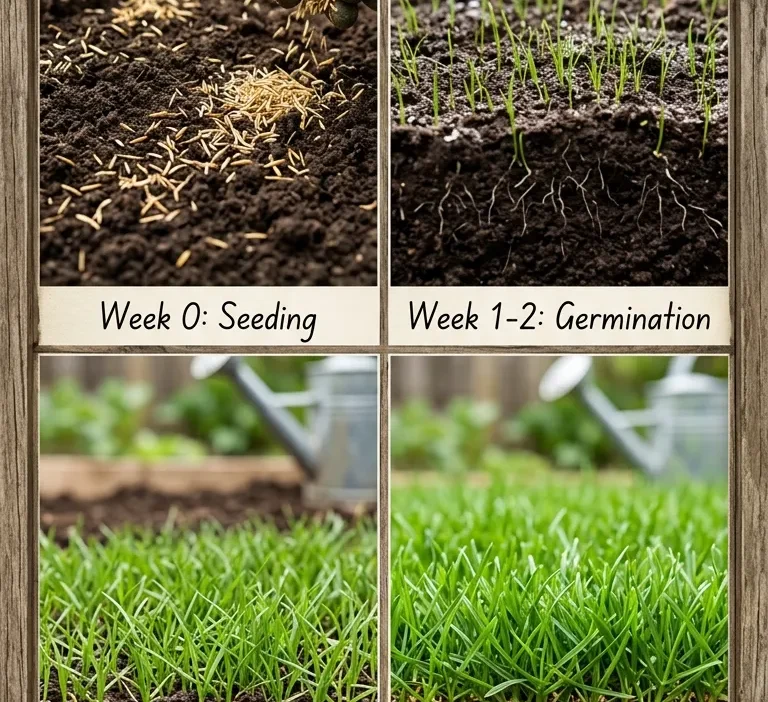
If you’ve just spread grass seed across a bare patch—or an entire yard—you’re probably wondering: how long does it take for grass seed to grow? The honest answer is that it depends on several factors, including the type of grass, soil temperature, and how consistently you water. On average, most grass seed varieties begin to germinate within 5 to 30 days, with some fast-growing types like perennial ryegrass sprouting in less than a week, while slower species like Kentucky bluegrass can take up to a month. But germination is just the first step. Getting from tiny green sprouts to a thick, mowable lawn takes several more weeks of care and patience.
In this guide, we’ll break down the full grass seed growth timeline by species, explain the key factors that speed up or slow down germination, and share practical tips to help your lawn establish faster and healthier.
How Long Does Grass Seed Take to Grow? A Timeline by Species
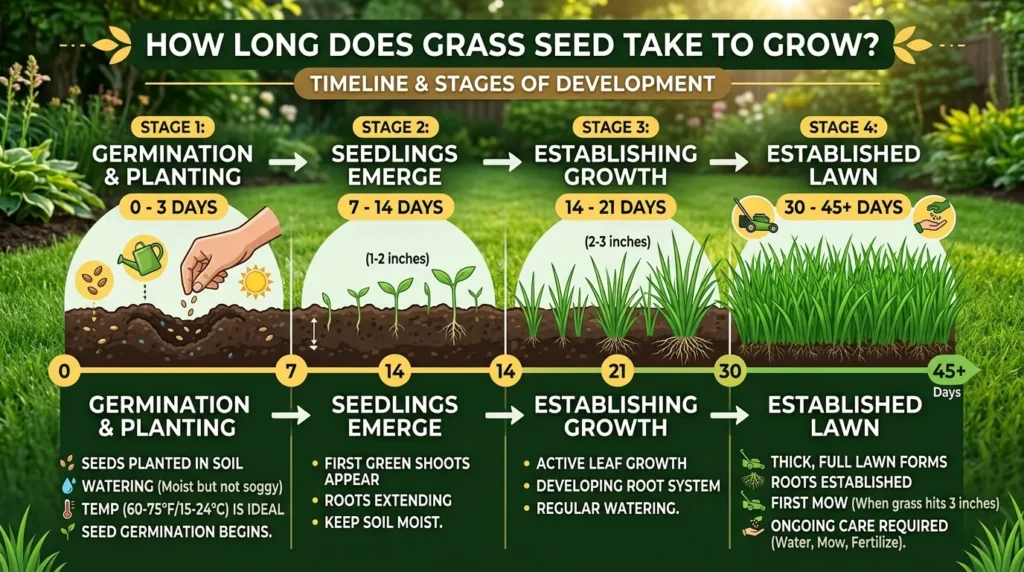
Not all grass seed grows at the same pace. Germination time depends heavily on whether you’re planting a cool-season or warm-season grass, since each type is adapted to different climates and temperature ranges.
Cool-Season Grasses
Cool-season grasses thrive in northern climates with cold winters and moderate summers. They generally germinate fastest among common lawn seed types.
- Perennial Ryegrass – The fastest-germinating cool-season grass, typically sprouting in just 5 to 7 days. It’s a popular choice for quick repairs and overseeding.
- Tall Fescue – Takes around 7 to 14 days to germinate. Known for its deep root system and drought tolerance once established.
- Fine Fescue – Similar to tall fescue, germinating in 7 to 14 days, and well-suited for shady areas.
- Kentucky Bluegrass – The slowest of the common cool-season grasses, often taking 14 to 30 days. It spreads via rhizomes, which gives it excellent self-repairing ability once mature, but patience is required early on.
Warm-Season Grasses
Warm-season grasses are suited to hot, southern climates and need warm soil to germinate—planting too early in cool soil will stall the process entirely.
- Bermuda Grass – Germinates in about 10 to 14 days when soil temperatures are consistently above 65–70°F.
- Zoysia Grass – Slower to establish, typically taking 14 to 21 days, and often longer to fill in completely.
- Centipede Grass – Also in the 14 to 21 day range, with a slow overall growth habit even after germination.
- St. Augustine Grass – Rarely grown from seed (most is established via plugs or sod), but when seed is available, it takes roughly 14 to 21 days.
Quick Reference Table
| Grass Type | Category | Germination Time |
|---|---|---|
| Perennial Ryegrass | Cool-season | 5–7 days |
| Tall Fescue | Cool-season | 7–14 days |
| Fine Fescue | Cool-season | 7–14 days |
| Kentucky Bluegrass | Cool-season | 14–30 days |
| Bermuda | Warm-season | 10–14 days |
| Zoysia | Warm-season | 14–21 days |
| Centipede | Warm-season | 14–21 days |
| St. Augustine | Warm-season | 14–21 days |
Knowing your grass type is the first step to setting realistic expectations—but germination is only part of the story. Next, we’ll look at what’s actually happening beneath the soil during each growth stage.
What Happens Beneath the Soil: The Stages of Grass Growth
Understanding what’s actually happening during each phase helps set realistic expectations—and makes it easier to spot problems early if something isn’t progressing as it should.
Stage 1: Imbibition (Days 1–2)
Before any visible growth occurs, the seed absorbs water and begins to swell. This process, called imbibition, softens the seed coat and activates enzymes inside that trigger germination. Consistent moisture during this window is critical; if the seed dries out now, the process can stall or the seed can die.
Stage 2: Germination (Days 3–10)
Once enough water has been absorbed, the seed sends down a small root (radicle) to anchor into the soil, followed shortly by a shoot pushing upward toward light. This is when you’ll first see thin green blades breaking through the soil surface. Exact timing varies significantly by grass species, as outlined in the previous section.
Stage 3: Seedling Establishment (Weeks 2–4)
The young grass plant begins developing a more robust root system and additional leaf blades. This is the most vulnerable stage—seedlings are fragile, sensitive to foot traffic, and still highly dependent on consistent watering since their root systems remain shallow.
Stage 4: Tillering and Spreading (Weeks 4–6)
The grass begins producing additional shoots from its base (a process called tillering), which increases density. Depending on the species, lateral spreading via stolons or rhizomes may also begin here, helping the lawn fill in bare spots naturally.
Stage 5: Maturity and Full Density (One Full Growing Season)
While a lawn may look established after 6–8 weeks, true maturity—with deep root systems and maximum density—typically takes a full growing season. Cool-season grasses often need a full year to reach their mature root depth, while warm-season grasses may establish faster in ideal summer conditions.
Each of these stages can be sped up or slowed down significantly based on external conditions. Next, we’ll break down the specific factors—like soil temperature, watering, and sunlight—that determine whether your grass hits these milestones on schedule or falls behind.
How to Speed Up Grass Seed Germination: A Step-by-Step Guide
Once you understand the factors that influence germination, you can actively optimize your process to help seed sprout faster and more reliably.
Step 1: Prep the Soil Properly
Good soil prep is the foundation of fast germination.
- Test your soil pH – Grass grows best in slightly acidic to neutral soil (6.0–7.0). Amend with lime or sulfur if needed.
- Aerate compacted soil – Loosened soil allows roots to penetrate easily and improves water absorption.
- Dethatch and remove debris – Clear away dead grass, rocks, and thatch so seed can make direct contact with soil.
Step 2: Choose the Right Seed for Your Climate
Match your seed type to your climate zone and site conditions (sun, shade, foot traffic). Using a grass type poorly suited to your region—no matter how well you care for it—will always germinate slower and struggle long-term.
Step 3: Use Proper Seeding Technique
- Seeding rate – Follow label recommendations; too much seed causes overcrowding and competition, too little leaves patchy coverage.
- Seeding depth – Rake seed in lightly to about ¼ inch deep, or use a mechanical seeder for even distribution.
- Starter fertilizer – A phosphorus-rich starter fertilizer applied at seeding encourages faster root development.
Step 4: Water on a Consistent Schedule
Watering needs change as the grass grows:
- Days 1–10 (germination): Light watering 2–3 times per day, just enough to keep the surface moist.
- Weeks 2–3 (seedling stage): Reduce to once daily, watering slightly deeper to encourage root growth downward.
- Week 4 onward: Transition to deep, infrequent watering (2–3 times per week) to build drought resilience.
Step 5: Protect the Seed with Mulch or Straw
A light layer of straw mulch (or seeding mulch mats) helps retain surface moisture, moderates soil temperature, and protects seed from birds and wind—all without blocking sunlight needed for germination.
Step 6: Limit Foot Traffic
Keep pets, kids, and lawn equipment off the area until grass has been mowed at least 2–3 times. Even light foot traffic can damage shallow-rooted seedlings.
The Best Time of Year to Plant Grass Seed
Even perfect technique can’t overcome bad timing. Planting during the wrong season is one of the most common reasons grass seed germinates slowly or fails altogether.
Cool-Season Grasses: Early Fall Is Ideal
For cool-season grasses (Kentucky bluegrass, tall fescue, fine fescue, perennial ryegrass), early fall (August–October, depending on region) is the best window. Warm soil from summer combined with cooling air temperatures creates ideal germination conditions, and there’s less competition from weeds like crabgrass.
Spring (March–May) is the second-best option, but comes with tradeoffs: seedlings have less time to establish deep roots before summer heat stresses them, and spring weed pressure is higher.
Warm-Season Grasses: Late Spring to Early Summer
For warm-season grasses (Bermuda, zoysia, centipede, St. Augustine), the ideal planting window is late spring through early summer (May–July), once soil temperatures are reliably above 65°F. Planting too early—while soil is still cool—can cause seed to sit dormant or rot before it ever germinates.
Why Timing Matters So Much
- Soil temperature must be in the right range for the specific grass type (see Section IV).
- Day length and sunlight intensity affect how quickly seedlings can photosynthesize and grow.
- Weed competition is lower in early fall for cool-season grasses, giving new seedlings less competition for water and nutrients.
- Seasonal rainfall patterns in many regions naturally support consistent moisture during these windows, reducing dependence on manual watering.
Regional Considerations
- Northern/cooler climates: Stick almost exclusively to cool-season grasses, planted in fall.
- Southern/warmer climates: Warm-season grasses planted in late spring/summer perform best.
- Transition zone (central U.S.): Both grass types can work, but timing is more critical—cool-season grasses should still go in during fall, and warm-season grasses in early summer.
Planting at the right time dramatically improves your odds of fast, even germination. But even with perfect timing and technique, problems can still come up. Next, we’ll troubleshoot the most common issues people run into after seeding.
Common Grass Seed Problems and How to Fix Them
Even with good timing and technique, issues can pop up after seeding. Here’s how to diagnose and fix the most common ones.
Seed Not Sprouting at All
If weeks have passed with no visible growth, the likely causes include:
- Seed buried too deep or left fully exposed on the surface
- Soil temperature outside the ideal range for your grass type
- Old or low-viability seed (check the germination rate on the label)
- Inconsistent watering, allowing the seed to dry out during a critical window
- Birds or rodents eating the seed before it can germinate
Fix: Rake the area lightly, reseed if necessary, and recommit to a consistent watering schedule. If soil temps are the issue, wait for the appropriate season rather than forcing it.
Patchy or Uneven Growth
Uneven germination is usually caused by:
- Inconsistent seed distribution during spreading
- Uneven watering coverage, especially with sprinklers that miss spots
- Shaded areas germinating slower than sunny ones
- Compacted soil in high-traffic zones
Fix: Overseed bare or thin patches, adjust sprinkler placement for even coverage, and aerate compacted areas before reseeding.
Mold or Fungus on New Seed
A white or gray fuzzy coating on seedlings—often “damping off” disease—is typically caused by overwatering combined with poor air circulation.
Fix: Reduce watering frequency, improve drainage if needed, and avoid watering in the evening (water in the early morning instead so the surface can dry during the day).
Birds and Animals Eating the Seed
Birds are especially drawn to exposed seed on the soil surface.
Fix: Use a light straw mulch cover to hide seed, or choose seed products with a bird-deterrent coating.
Overwatering vs. Underwatering Symptoms
| Symptom | Likely Cause |
|---|---|
| Seed rotting, moldy smell, no germination | Overwatering |
| Seed dry, cracked soil surface, stalled germination | Underwatering |
| Yellowing seedlings | Overwatering |
| Wilting, thin seedlings | Underwatering |
Fix: Aim for consistently moist (not wet) soil—use a finger test daily until seedlings are established.
Once germination issues are resolved and grass is growing steadily, the next phase is aftercare—knowing when to mow, water less, and fertilize as your lawn matures. That’s covered next in Section VIII.
Ready for Section VIII (Aftercare Once Grass Sprouts)?
Here’s Section VIII: Aftercare Once Grass Sprouts
Aftercare: Caring for Grass After It Sprouts
Getting seed to germinate is only half the job. How you care for the lawn in the following weeks determines whether it becomes thick and healthy or stays thin and fragile.
When to Mow for the First Time
Wait until grass reaches about 3–3.5 inches tall, then mow it down to no shorter than 2.5–3 inches—never cut more than one-third of the blade height at once. Mowing too early or too short stresses shallow, immature roots and can undo weeks of growth.
- Make sure mower blades are sharp; dull blades tear seedlings instead of cutting them cleanly.
- Avoid mowing when the soil is wet, since equipment can compact the ground or uproot fragile grass.
Gradually Reducing Watering Frequency
Once seedlings are established (typically after the first mow), shift from frequent light watering to deep, infrequent watering—about 1 inch of water per week, split into 2–3 sessions. This encourages roots to grow downward in search of moisture, building a stronger, more drought-resistant lawn.
First Fertilization After Germination
If a starter fertilizer wasn’t used at planting, apply a balanced, nitrogen-focused fertilizer 4–6 weeks after germination to support leaf growth and thickening. Avoid fertilizing immediately at germination, as it can burn tender seedlings.
When It’s Safe for Foot Traffic
Hold off on regular foot traffic, pets, and play until the lawn has been mowed 2–3 times, which usually means roots are established enough to handle light use. Even then, ease into heavier traffic gradually rather than resuming full use immediately.
Ongoing Care for Long-Term Density
- Continue mowing regularly at the recommended height for your grass type.
- Overseed thin spots the following season to thicken the lawn further.
- Monitor for weeds, which can outcompete young grass if left unchecked.
Frequently Asked Questions
How long does grass seed take to grow in cold weather?
In cold weather, germination slows dramatically or stops altogether. Most grass seed needs soil temperatures above 50°F to germinate at all, so seed planted in cold conditions may sit dormant for weeks until the soil warms up—germination isn’t truly “slow” in this case, it’s paused.
Can you put down too much grass seed?
Yes. Overseeding beyond the recommended rate on the product label causes seedlings to compete for water, nutrients, and sunlight, often resulting in thin, weak growth rather than a thicker lawn. Stick to the manufacturer’s recommended seeding rate for best results.
Does grass seed need sun or shade to germinate?
Most grass seed needs at least partial sunlight (4–6 hours daily) to germinate and grow well. Deep shade slows germination and weakens seedlings, which is why shade-tolerant blends (like fine fescue) are recommended for low-light areas.
Why isn’t my grass seed growing after 2 weeks?
The most common culprits are inconsistent watering, incorrect seeding depth, soil temperatures outside the ideal range, or old/low-viability seed. Check each of these factors—if watering and depth are correct, soil temperature is often the missing piece.
Can I speed up germination with a specific product?
Seed-starter fertilizers, seeding mulch mats, and biochar-based soil amendments can all modestly speed up germination by improving moisture retention and nutrient availability. However, no product can override poor timing or the wrong grass type for your climate—those factors matter more than any additive.
How long does it take grass seed to grow to 3 inches?
Once germinated, most grass reaches mowing height (3–3.5 inches) within 3 to 5 weeks after sprouting, depending on grass type, weather, and care. Fast-germinating types like ryegrass often reach this height sooner than slower species like Kentucky bluegrass.
Conclusion
So, how long does grass seed take to grow? In most cases, you’ll see the first sprouts within 5 to 30 days, depending on the grass type, with cool-season varieties like perennial ryegrass leading the pack and slower growers like Kentucky bluegrass testing your patience. But germination is just the beginning—getting to a thick, mowable lawn typically takes 4 to 6 weeks, and true maturity unfolds over a full growing season.
The good news is that most of the variables are within your control. Choosing the right grass type for your climate, planting at the optimal time of year, prepping your soil properly, and sticking to a consistent watering schedule can make the difference between a frustrating, patchy result and a lawn that fills in exactly on schedule.
Grass seed rewards patience and consistency more than any single trick or product. Stay on top of watering, give it time, and resist the urge to rush the process—your lawn will get there.
Not sure which grass seed is right for your yard? Check out our guide to choosing the best grass seed for your climate and soil type.